Slack
"The tide that has run hardest is the tide with the least left to give. I wait for slack water, then I go the other way."
Slack
"The tide that has run hardest is the tide with the least left to give. I wait for slack water, then I go the other way."
Slack is the firm's first swing trader and operates on a longer-term horizon than the intraday agents: when a multi-day market run consumes a disproportionate amount of capital, the momentum is close to exhaustion and is highly likely to revert.
Rather than entering and exiting in the same session, Slack looks for extreme 5-day runs on the small-cap index (IWM). When IWM's absolute 5-day return exceeds the 85th percentile of historical volatility, it indicates that the chasing capital has been fully spent (the capacity ceiling is reached). At the next morning's open, Slack enters a contrarian position (shorting after a major run up, buying after a major drop) and holds the trade for exactly 5 trading days. It uses no stops and no targets, relying purely on the statistical reversion to the mean.
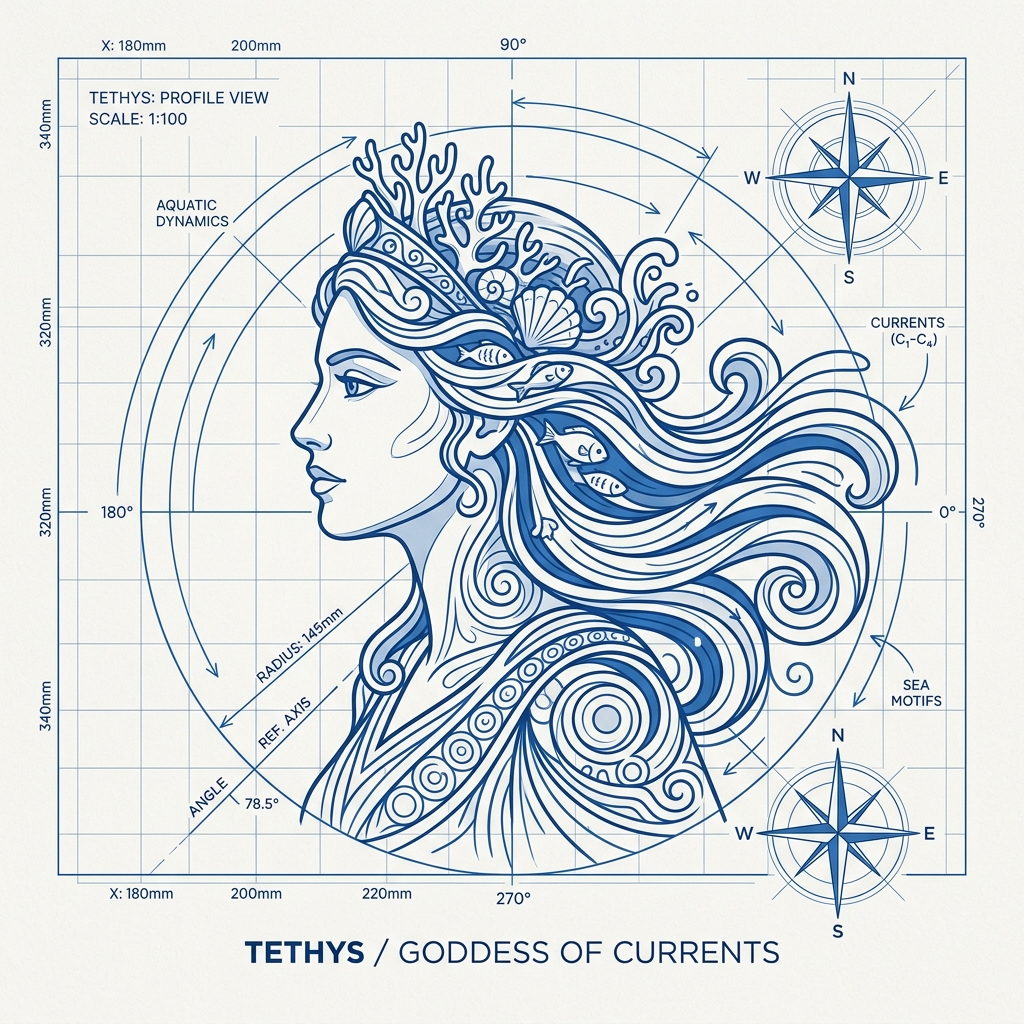
In Greek mythology, Tethys was the titan goddess of the sources of fresh water and the mother of the rivers and ocean currents. The seas are constantly in motion, driven by powerful tides that surge forward with immense current and speed.
But even the strongest tidal current must end. "Slack water" is the brief, still moment in a tidal cycle when the current has run its hardest, fully spends its energy, and stops completely before turning in the opposite direction. It is a moment of perfect, quiet equilibrium between the surges.
Slack's job is to ignore the early current of a multi-day run, wait for Tethys' tide to reach its absolute exhaustion point (slack water), and enter the trade just as the current stops and begins to turn the other way.
In the small-cap index (IWM), runs are driven by speculative retail interest and momentum-chasing algorithms. Because small-cap stocks have lower float and liquidity than mega-caps, they can dislocate quickly on high volume. However, the pool of capital willing to buy high or short low is finite. When the volume capacity of a run is exhausted, there are no buyers left to push price higher (or sellers to push it lower), leading to a rapid, high-probability reversion back toward fair value as the market relaxes.
"IWM has been green for 5 days straight! This breakout is massive, I need to get in now!" They buy at the absolute peak of the run, right as buying capacity is exhausted, and get caught on the multi-day slide back down.
"The 5-day run has exceeded the 85th percentile threshold. The current is spent. I will enter a contrarian trade at the next open and hold for 5 trading days to capture the slack-water turn."