[LIVE] SYSTEM STATUS: ACTIVE
CRUCIBLE PORTAL — THE DELPHIC ORACLE
Aug 13, 2026 18:37 ET

Doctrine & Structure

The foundational lineage, governance, and architecture of Crucible Trading.

Firm Structure

Development Pipeline

These agents are currently under active research and validation. They must achieve rigorous backtest clearance under TEMPER review before being promoted to live paper trading.

There are currently no active agents in the Phase 1/Phase 2 development pipeline. All validated agents have been promoted to the active desk or parked.

Seven-Family Framework

The firm's strategies are organized into seven orthogonal edge families. Each family has one founding agent who establishes a house — a trading lineage bearing that agent's name, sigil, and philosophy.

FamilyEdge TypeHousesStatus
1 — ReversalMean reversion; fade overextended moves back to equilibrium. Best in low-vol, range-bound sessions. Sits out trend days and event days.House Wicker · House Null · House Meridian✅ Phase 3 active
2 — MomentumTrend continuation; trade with the dominant intraday direction after establishment. Opening range breakout, first-hour continuation, ADX > 35 sessions — the days Family 1 gates out of.House Echo · House Surge✅ Phase 3 active
3 — StructuralTime-of-day and microstructure order flow; VWAP magnetism, session-level mechanics independent of direction. Edge is where and when, not which way.House Trident✅ Phase 3 active
4 — ArbitrageStatistical arbitrage, lead-lag relationships, spread convergence.House Delta✅ Phase 3 active
5 — Pattern RecognitionSimilarity-based prediction, k-nearest neighbors matching, high-dimensional microstructural memory.House Mneme (Mneme, Trace, Ghost)✅ Phase 3 active
6 — SwingCapacity-driven multi-day swing mean reversion; trade contrarian to 5-day exhaustion runs.House Slack✅ Phase 3 active
7 — Session StructureClose-to-open overnight hold; harvest overnight session drift driven by clientele demand.House Vesper✅ Phase 3 active

Family 1 carries three houses under the Reversal banner, and Family 5 carries three active agents under House Mneme to provide robust instrument coverage (SPY, DIA, IWM). Families 2 (Echo, Surge), 3 (Trident), 4 (Delta), and 6 (Slack) are active with their respective founding agents. Together, the active houses provide comprehensive, uncorrelated regime coverage.

On houses: Each founding agent IS their house. The agent's name is the house name. The motto they chose in Phase 1 is the house sigil — the distilled identity of their trading philosophy. House members (junior agents) spawned from reflection carry that lineage forward. A house grows through hypothesis testing and promotion, never through modification of the founder's baseline.

Why Seven Families?

The seven-family structure exists for two reasons that reinforce each other: regime coverage and portfolio-level hedging.

Regime coverage. These edge types were chosen because they activate in genuinely different market conditions — ideally, the conditions where the others sit out. Family 1 (Reversal) needs range-bound, mean-reverting sessions and explicitly filters out trend days. Family 2 (Momentum) is designed for exactly those trend days — high-ADX, directional sessions that Family 1 gates out of. Family 3 (Structural) is orthogonal to both: its edge is when and where, not which direction or whether the market is trending. It operates on session mechanics that are present regardless of regime. Family 5 (Pattern Recognition) focuses on similarity-based prediction, high-dimensional memory, and k-nearest neighbors matching, providing another layer of orthogonal, data-driven edge. Family 4 (Arbitrage) exploits technology sector lead-lag relationships. Family 6 (Swing) operates on a multi-day timescale to capture capacity exhaustion. Together, the seven families are meant to cover the primary market condition space without material overlap in their activation profiles.

Why seven families? The seven-family structure is what's been validated so far, not a designed ceiling (softened 2026-07-12, Workstream 9d — see the taxonomy-demotion note above; the family/desk count is an output of validated mechanisms, not a slot limit). The constraint is real orthogonality: adding families that activate in the same conditions as an existing one adds redundancy, not coverage — though as of 2026-07-12 that orthogonality is still a stated assumption, not yet a measured one. Seven represents a comprehensive map of our current scope and resources, covering Reversal, Momentum, Structural, Arbitrage, Pattern Recognition, Swing, and Session Structure.

Stage 1: The Founding Desk (historical — superseded, see below)

Originally: each founding trader with one strategy, no juniors — this stage's own header always said "five founding traders," which was stale even before the ten-agent roster in the Founding Premise above; kept here verbatim as history rather than silently corrected (Rule 4, append-only). By 2026-07-02 the roster had grown to ten agents across six families, all in Phase 3 paper trading.

Stage 2: Live Trading and First Hypotheses (Phase 4, months away)

Agents begin accumulating live trading history. Reflection cycles produce hypotheses. Hypotheses start queuing as potential house members (junior agents). This is when the houses open — not now, not during backtesting, not during paper trading. House members spawn from live observations, not backtest curiosity. (Superseded 2026-07-12, Workstream 9c landed: house members may spawn from any evidence source via the Research Bench (research/BENCH.md), not live observation only — "live observations only" was gating capital, not testing, and the bench replaces it as the actual overfitting guard. See the "Note on edge lifecycle and taxonomy" above.)

Stage 3: House Formation — reached 2026-07-11, by consolidation rather than organic growth

As each founding agent's house membership grows, a desk begins to take shape. A desk is: one house founder (the founding trader) + their active house members. The founder's attention starts shifting from direct execution toward oversight — reviewing house member performance, making promotion/shutdown decisions, directing research.

Threshold for desk formation (provisional, as originally written): When a house has 3+ active members in paper or live deployment, the founder enters a transitional role. This threshold was never organically met by any single founder — no house had accumulated 3+ live-spawned juniors by 2026-07-11. Instead, FIRM_REVISION_PLAN_V2.md assigned the desk-PM role directly, consolidating existing sibling strategy stacks (Wicker+Null+Meridian under Reversal; MNEME+TRACE under House Mneme) as the "members," driven by a cost problem (twelve daily personas) this document didn't anticipate rather than by the hypothesis-generation path described here.

Stage 4: Portfolio Management — partially reached, same consolidation event

When a house has stable membership with multiple promoted members, the founder's primary role becomes portfolio manager of that house. Their own direct trading may be reduced or transferred to a house member who has fully replicated and improved upon the founding strategy. The founder's value is now in:

2026-07-11 note: the five desk PMs (MNEME, Wicker, ECHO, DELTA, SLACK) now write one plan and one reflection covering all their members — functionally the Stage 4 role — but this arrived via consolidation of pre-existing strategy stacks, not via "multiple promoted [live-spawned] members." The distinction matters for reading this document honestly: the firm has the shape of Stage 4 oversight without having earned it through the validation path Stages 2–3 describe. Workstream 9 (house-member spawning unlocked from Phase 4) is what starts closing that gap.

At this stage the firm has evolved from ten active agents to five desks plus one parked stack (not six houses — TRIDENT's Family 3 has no desk; see the "Note on desk consolidation" above), each retaining the character of its founder's original philosophy and sigil.

Stage 5: Firm-Level Governance (far future)

If all six houses are stable and performing, a firm-level coordination layer may emerge. Who adjudicates cross-house conflicts? Who decides when a strategy family has run its course? This is undefined intentionally — let it emerge from the reality of the houses rather than designing it in advance.

House Reversal Founding Doctrine

HOUSE REVERSAL / OIKOS ISORROPIAS

Established: 2026-06-20 Status: ● ACTIVE Founders: Wicker, Null, Meridian
House Reversal Sigil - Scales of Equilibrium

This document is the canonical expression of Family 1's edge philosophy. It is extracted retrospectively from the converged practices of the three founding agents, who arrived at these principles independently during Phase 1 bootstrapping.

Founding agents' individual pillars are the authoritative living state for their own strategies. This doctrine captures what is shared — the principles that make a strategy a Family 1 strategy. When juniors are spawned, they inherit this doctrine as their starting pillar state and must explicitly justify any divergence from it.

Edge Type

Fade overextended moves back to structural equilibrium. The entry is always counter to the immediate price action. The firm's Family 1 agents are not predicting direction — they are recognizing that a structural level has been swept, that the sweep was institutional rather than a genuine breakout, and that the mechanical consequence is a return to the prior equilibrium.

This edge is not trend-following. On sessions where the market has committed to a direction (trend days), Family 1 gates out. The days Family 1 misses are intentionally missed.

Doctrine by Pillar

Signals
  • The sweep or extreme must be structural — anchored to a session level (Asian H/L, London H/L, prior day H/L, overnight gap) — not arbitrary price.
  • Entry is via Fair Value Gap (FVG) left during the reversal impulse. Entry at 50% equilibrium.
  • Confirmation is required before entry. No entries at the extremity itself.
  • Each agent has its own confirmation layer (OBV coherence, RSI(2) exhaustion, gap ratio filter) — those are agent-specific, not family doctrine.
Instruments
  • Mode: fixed. Instrument-specific liquidity structure is the edge. The sweep fingerprint, gap behavior, and institutional flow patterns are properties of specific instruments, not transferable signals that work on whatever is "in play."
  • Primary instruments are equity index futures (NQ/MNQ, ES/MES proxied via QQQ/SPY).
  • Expansion requires evidence: co-fire analysis for multi-instrument setups, 30+ paper trade WR confirmation at family benchmarks before any new instrument is added.
  • Scanner output is welcome as regime/context input. It does not select the instrument.
Timing
  • The NY Kill Zone is the family's primary operating window — where overnight institutional accumulation resolves into the real directional move. Agents operate within it; exact window boundaries vary by strategy.
  • Gate out when the market has established committed trend momentum. All three agents use ADX or equivalent regime filters; the threshold varies but the principle is shared.
  • Sit out macro event days where the scheduled release will override technical structure.
Risk
  • Session trade limits enforced. No unlimited entries — maximum 2 trades per session is the family standard; individual agents may be tighter.
  • Stop at structure invalidation (FVG boundary or level reclaim). Not arbitrary ATR stops.
  • One position at a time during Phase 3.
Benchmarks
  • Family minimum: WR ≥ 55%, PF ≥ 1.5, max drawdown ≤ 15% over 30+ trades.
  • Individual agents carry higher bars calibrated to their W/L ratio (Null: WR ≥ 58% due to inverted W/L; Meridian: WR ≥ 60% for combined instruments).
  • SPY Calmar comparison is a required deliverable for all Backtest Agent submissions.

Pillar Evolution Protocol

  • Individual agent pillars evolve via /pillar-update — evidence threshold: confirmed backtest finding, Backtest Agent clearance, or 30+ paper trade confirmation.
  • Doctrine updates require a higher bar: the finding must be validated across at least two of the three founding agents (or one founding agent + one promoted junior), and ZEUS approval.
  • Junior agents inherit this doctrine as their starting pillar state. Divergences from doctrine must be flagged in the junior's pillar file with explicit rationale.
  • Upward propagation: when a junior's divergence is validated, they may propose it for doctrine adoption via the founding agent. The founding agent decides; ZEUS approves.

What Is NOT Family Doctrine

The following are agent-specific, not family-wide:

  • Wicker's OBV/coherence check filter
  • Null's gap ratio bounds (0.10–0.70× ATR)
  • Meridian's RSI(2) exhaustion gate and bearish-only direction
  • Specific ADX thresholds (Wicker: < 35; Meridian: 18–32)
  • Individual benchmark floors above the family minimum

These are the sources of competitive differentiation within the family. They are not to be homogenized across agents.
House Momentum Founding Doctrine

HOUSE MOMENTUM / OIKOS ORMES

Established: 2026-06-20 Status: ● ACTIVE Founders: Echo
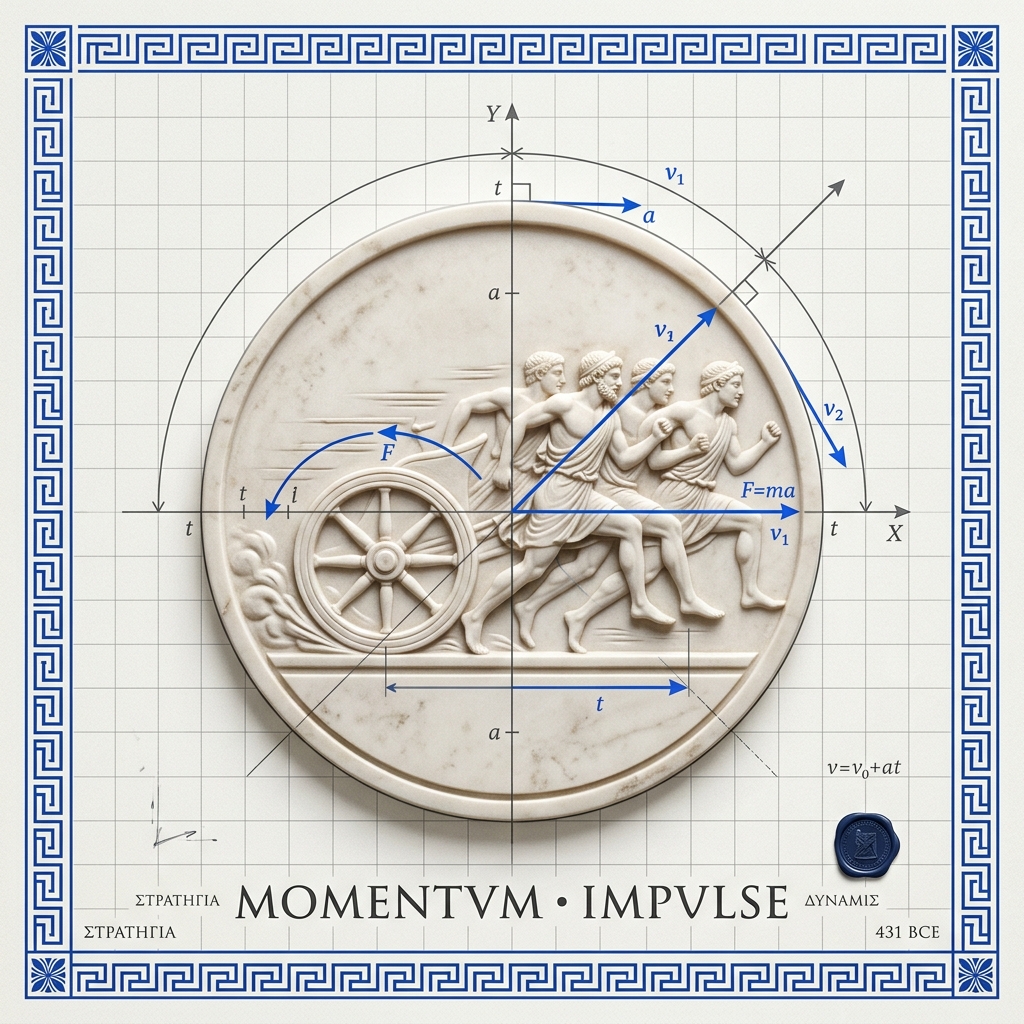
House Momentum Sigil - Chariot of Impulse

This document is the seed doctrine for Family 2. It was extracted from ECHO's v3–v6 strategy development cycle after ECHO reached Phase 3 on 2026-06-20.

ECHO's family classification requires a note: the strategy name is "Momentum / Trend Continuation," but ECHO's actual expression is close-leg mean-reversion of confirmed exhausted trends — not raw momentum. The family name reflects the session character ECHO selects for (sustained institutional directional programs running all day), not the direction ECHO trades. Future Family 2 agents may trade with or against the trend; the unifying thread is that the trend itself is the instrument — you either ride it or exploit its exhaustion, but you need it to have run.

This doctrine is a seed. With one founding agent it captures ECHO's principles. It will be revised when a second agent reaches Phase 3 and validates, extends, or diverges from these principles.

Edge Type

Select sessions where institutional directional programs ran at scale. Trade the mechanical consequence of their completion.

Family 2 agents work on sessions where something structural happened — a large directional program ran all morning, consuming liquidity in one direction. By the close window, that program is complete. What happens next is not continuation; it is the resolution of the accumulated residual pressure (unfilled contra-orders, MOC supply, options hedging at extremes) that built up on the other side while the program was running.

Family 2 agents do not predict which direction the day goes. They predict that a day which ran hard in one direction — confirmed by specific gate conditions — will produce a measurable mechanical consequence at the end. The gate structure is the edge, not the direction.

This edge is not prediction of reversal. It is recognition of a specific session character (gate-confirmed exhausted trend) and positioning for the mechanical consequence that follows it.

Doctrine by Pillar

Signals
  • Session character is the signal. Family 2 agents do not trade intraday signals. The morning establishes a directional commitment (measured at a specific window close, typically 10:00 ET); gates confirm the commitment was institutional in scale; the agent then acts at the appropriate session window.
  • Signal threshold is absolute. ECHO uses |signal_return| ≥ 0.25%. Future agents may use different thresholds; the point is a minimum directional commitment is required. Sessions that drifted — no clear directional commitment — are not Family 2 sessions.
  • Composite quality scoring before entry. ECHO's exhaustion_score (vol_ratio × |signal_return_pct|) is an instrument-level composite that ranks session quality. Family 2 agents should use a quality composite — not single gates in isolation. Thin setups produce thin edges. The gate structure exists to select the strongest instances of the session character, not every instance.
  • Gate failure is information. A session where the volume gate or VWAP gate fails is a session where the institutional program did not reach the expected scale or did not sustain. That session should be sat out, not relaxed into.
Instruments
  • Mode: dynamic-universe (scanner-first). Unlike Family 1, Family 2 agents do not require a fixed instrument's specific liquidity structure. The edge is the session character — gate-confirmed directional exhaustion — which can manifest on any sufficiently liquid instrument with a clear enough catalyst to drive an institutional program. The scanner identifies which instruments qualify each session.
  • Instrument eligibility requires a mechanism. Not every liquid instrument qualifies for every session. XLE has EIA Wednesdays (discrete catalyst → complete program). XBI has FDA approvals (discrete catalyst). SPY has broad macro events. QQQ was excluded because mega-cap concentration extends programs into the close rather than completing them by 15:20. Each instrument added to the universe requires a mechanical justification for why institutional programs in it should complete by the target gate-check time.
  • Instrument disqualification is permanent or date-conditional. QQQ is permanently excluded for ECHO (extension mechanism). XBI is excluded on rejection days (chaos, not direction). Hard disqualifications should survive until there is evidence the mechanism has changed, not just until performance improves.
  • Individual instrument metrics are tracked separately. The scanner-first architecture creates the risk that one weak instrument drags the composite without failing any session gate. Track WR and PF per instrument independently; define pre-specified exclusion triggers (e.g., XBI WR < 50% over 15 live trades → exclusion review).
Timing
  • Act at the session's structural completion point, not earlier. ECHO's window is 15:30–15:58 ET — the 28 minutes after institutional programs are substantially complete. The exact window depends on the mechanism; the principle is that Family 2 agents wait for the session's directional program to exhaust before acting, then act at the specific time the exhaustion consequence is expected.
  • The gate-check time is the confirmation moment. Gates are evaluated once, at a defined time before entry. Checking gates continuously during the session introduces re-entry risk and confirmation bias. One evaluation, one decision.
  • Hard skip on known interference events. Macro event days (FOMC, CPI, NFP) override session character. Whatever direction formed by 10:00 ET may be erased by a 14:00 announcement. These are not Family 2 days.
Risk
  • Session budget is the primary constraint. Multi-instrument entry creates correlated risk when instruments move together. The session budget (2.0% for ECHO) ensures that simultaneously entering multiple instruments does not blow the risk allocation. Budget scaling activates when combined risk exceeds the cap.
  • Position sizing is dollar-risk-based, not contract-based. The stop distance (ATR- based) determines the share/contract size. This keeps risk comparable across instruments with different volatility levels.
  • Stops are ATR-based, not structure-based. Family 1 stops at structural invalidation (FVG edge). Family 2 stops are volatility-based (1.5× ATR for ECHO) because the edge is statistical — a known distribution of close-window moves — not anchored to a specific structural level.
  • Time exit is the primary exit. The edge has a defined window. Exiting at the hard time (15:58 for ECHO) captures the full window's price action without discretionary override. Stops exist to limit catastrophic sessions, not to be the typical exit.
Benchmarks
  • Family minimum: WR ≥ 55%, PF ≥ 1.5, max drawdown ≤ 8% (tighter than Family 1 due to the nature of close-leg risk), ≥ 80 trades in development.
  • ECHO-specific bars: Calmar ≥ 1.0; beat random control (same sessions, random direction) on both WR and PF — this is the decisive benchmark for signal value.
  • SPY B&H Calmar comparison is a required deliverable for all Phase 2 backtest submissions.
  • Random control is mandatory for all Family 2 agents. The morning signal must add directional value over random; without this test, a profitable result could be structural (time-of-day or volatility harvesting) rather than signal-driven.

Lessons from ECHO's Development Cycle (v1–v6)

These are learnings from ECHO's Phase 1 → Phase 2 cycle that future Family 2 agents should not have to rediscover:

  1. Signal direction is not obvious. ECHO's v1/v2 traded WITH the morning signal (momentum continuation). The backtest showed -0.324 morning→close correlation — the signal was anticorrelated. Future agents should test both directions in Phase 1. "This instrument had a strong morning up move" does not tell you which way to trade at the close.
  2. QQQ's mega-cap concentration prevents exhaustion. QQQ's top-10 holdings (~50% weight) are driven by programs that add MOC rebalancing into the close, extending the morning direction rather than exhausting it. QQQ 41.2% WR / PF 0.63 in v3 dev and 35.7% WR / PF 1.08 in holdout confirmed this. Exclude QQQ from close-leg exhaustion strategies unless there is evidence the mechanism has changed.
  3. Scanner-first creates instrument routing risk. Sector ETFs (XLE, XBI) have larger first-half-hour returns on their catalyst days than SPY, so a scanner built on signal magnitude consistently routes to sectors — not to the broad market instrument that may have better academic support or liquidity. Track instrument routing explicitly. If one instrument dominates because its signal_return is always largest, validate that instrument's edge directly, not just the composite.
  4. Quality floor is better than ranking for multi-instrument entry. v4's ranking architecture (enter the single highest-scoring instrument) kept WR high but limited trade count. v5's architecture (enter all qualifying) improved count but dropped WR because it included low-score sessions. v6's solution — instrument-level score floor + multi-instrument simultaneous entry — restored quality while preserving count. When moving from single to multi-instrument entry, add a quality floor, not just gates.
  5. In-sample-derived thresholds must be flagged and monitored. ECHO's T=0.80 was derived on the same dev data used for the Phase 2 backtest. This is a calibration parameter. TEMPER requires live score distribution monitoring to validate it. Future agents with in-sample-derived thresholds should adopt the same monitoring practice: log the score metric per live trade and compare against dev distribution after 40+ trades.

Pillar Evolution Protocol

  • Individual agent pillars evolve via /pillar-update — evidence threshold: confirmed backtest finding, Backtest Agent clearance, or 30+ paper trade confirmation.
  • Doctrine updates require: finding validated from at least two Family 2 agents (or one founding agent + one promoted junior), and ZEUS approval before any edit.
  • Junior agents inherit this doctrine as their starting pillar state. Divergences from doctrine require explicit justification backed by Phase 2 evidence.
  • The doctrine is a seed — ECHO establishes it alone. The second Family 2 agent may validate, extend, or diverge. This doctrine should be revised at that point to reflect cross-agent convergence (or principled divergence).

Created 2026-06-20 — extracted from ECHO v6, founding agent of Family 2. Revision trigger: second Family 2 agent reaches Phase 3.

House Structural Founding Doctrine

HOUSE STRUCTURAL / OIKOS TAXEOS

Established: 2026-06-21 Status: ● ACTIVE Founders: Trident, Forge (retired)
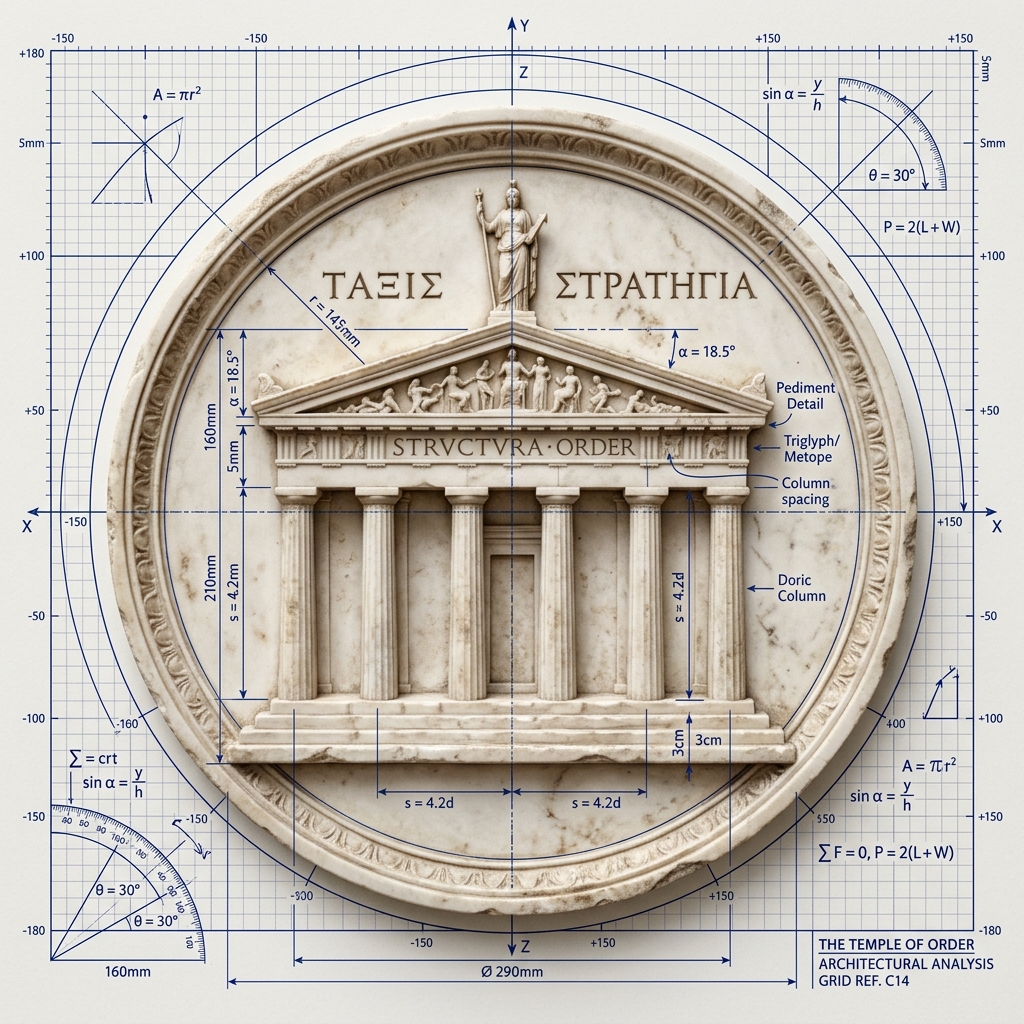
House Structural Sigil - Temple of Order

House Structural's founding doctrine is centered on the premise that the market's structural and temporal mechanics are the edge — trading the time-of-day windows, VWAP attraction, and obligated auction flows where institutional participants are forced to cross the spread.

The house was co-founded by Forge, who was retired on 2026-06-21 after TEMPER rejected its proxy-based imbalance signal. Sibling agent Trident was subsequently cleared and validated, and is currently running as the active desk under the Family 3 banner.

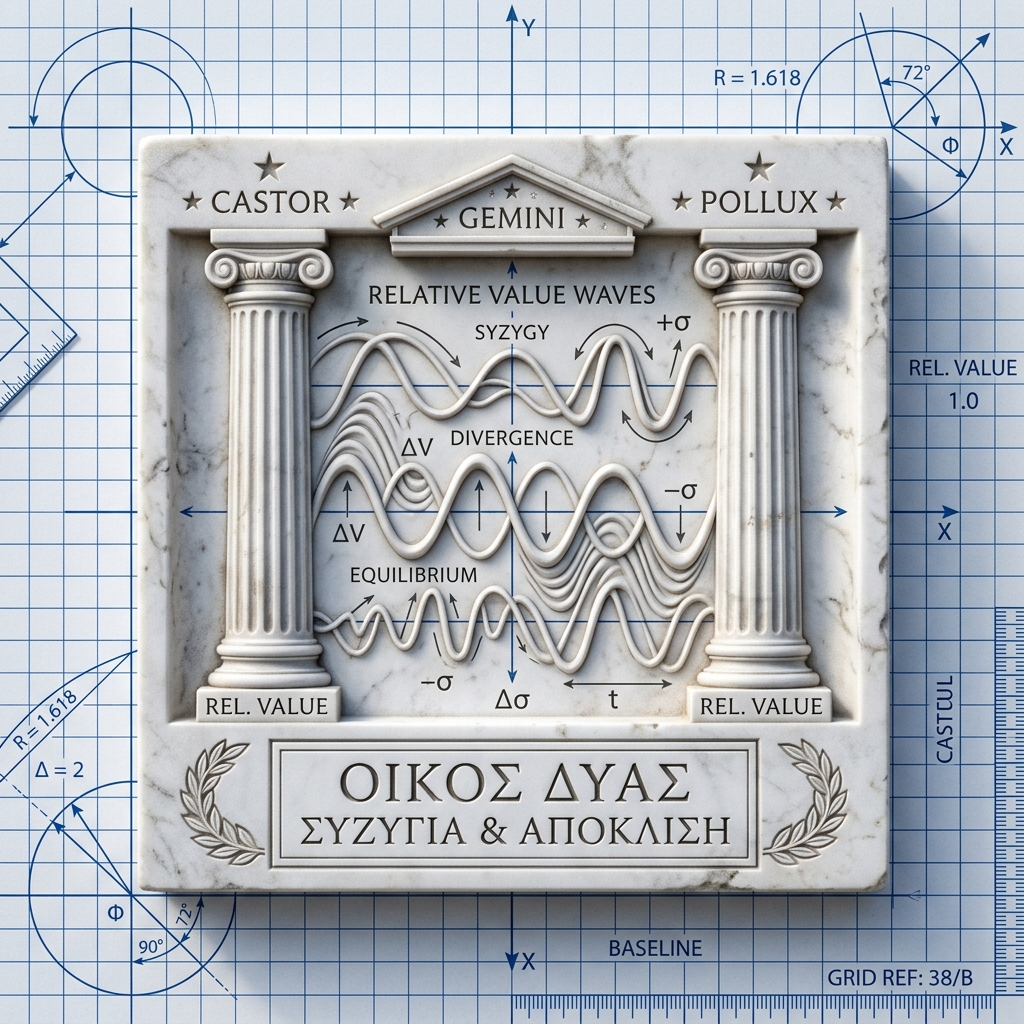
House Delta Founding Doctrine

HOUSE DELTA / OIKOS DYAS

Established: 2026-06-25 Status: ● ACTIVE Founders: Delta
House Delta Sigil - Twin Pillars of Relative Value

House Delta's founding doctrine is centered on the premise that in high-momentum sectors, supply-chain leaders and laggards must move together, but their synchronization is delayed. Rather than relying on static statistical arbitrage models that break down, House Delta exploits the physical lag of supply chain repricing.

When a sector leader (like NVDA or AMD) moves significantly, it acts as a leading indicator for the rest of the semiconductor chain. The house's agents trade the laggards (like ASML or TSM) in the direction of the leader's first-hour move, capturing the delayed institutional flow as it propagates through the sector.

House Mneme Founding Doctrine

HOUSE MNEME / OIKOS MNEMOSYNES

Established: 2026-06-24 Status: ● ACTIVE Founders: Mneme, Trace, Ghost
House Mneme Sigil - Pillar of Memory

House Mneme's founding doctrine is centered on the premise that in high-dimensional time series, the market's memory is the ultimate edge. Rather than relying on lagging indicators, indicators of momentum, or structural levels, House Mneme uses pure pattern recognition via k-nearest neighbors (KNN) to query historical market states.

By encoding 5-minute bars (capturing price return, volume ratio, and VWAP position) into multidimensional vectors, the house's agents identify the closest historical matches (nearest neighbors) and execute trades when there is a decisive directional consensus (majority vote ≥ 62%) across those matches.

The house spans three active agents across different instruments to ensure robust coverage and instrument-level hedging:

  • Mneme (SPY): The anchor model, running a three-window KNN search on S&P 500 liquidity flows.
  • Trace (DIA): Utilizing a highly selective, high-similarity threshold (≥ 0.60) to follow clean blue-chip footprints in the Dow 30.
  • Ghost (IWM): Haunting the volatile edges of small caps with a customized two-window search optimized for Russell 2000 stress.

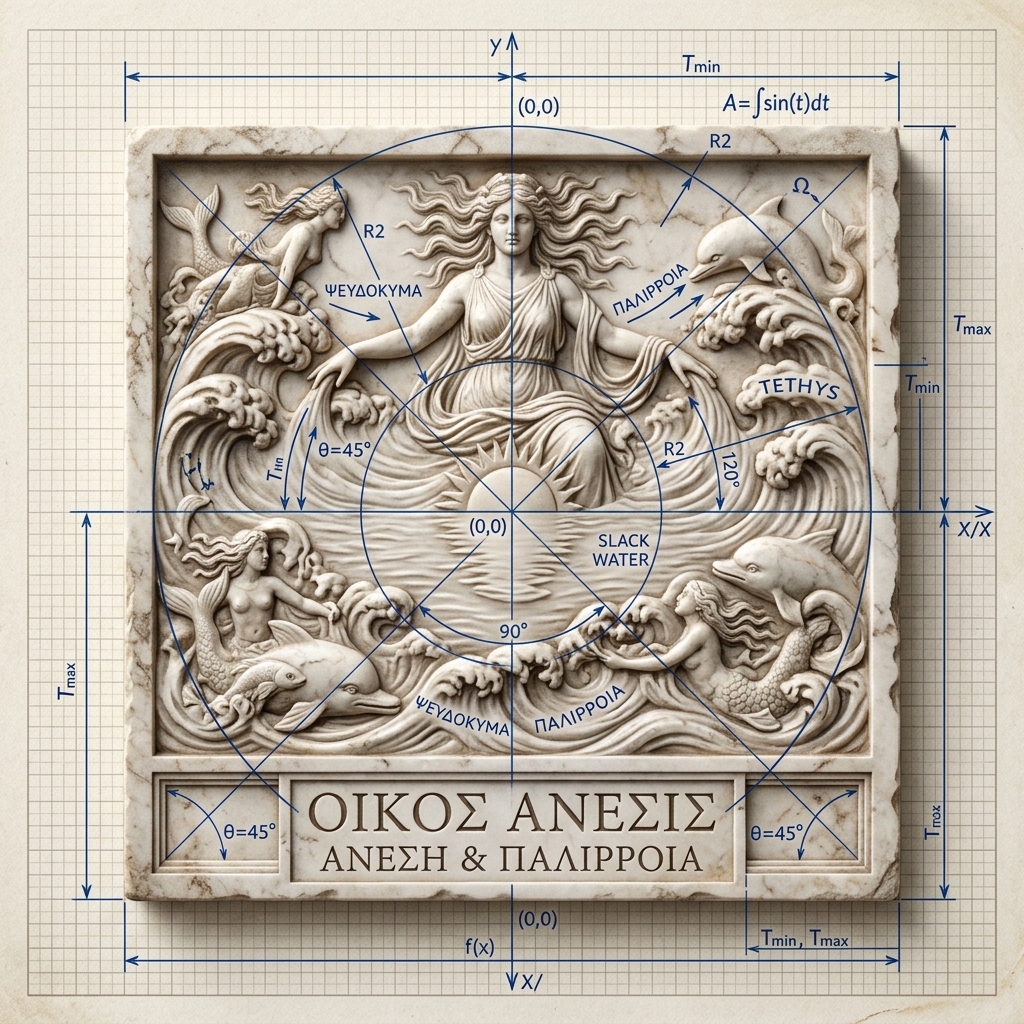
House Slack Founding Doctrine

HOUSE SLACK / OIKOS ANESIS

Established: 2026-07-02 Status: ● ACTIVE Founders: Slack
House Slack Sigil - The Slack Water Tides

House Slack's founding doctrine is built on the premise that every massive trend has a capacity limit, and the stillest water occurs right before the tide turns. Operating on multi-day timescales, House Slack targets extreme momentum exhaustion.

By measuring the capacity ratio—the cumulative volume and price distance traveled relative to historical distributions—the house's agents identify when buying or selling pressure is mathematically spent. They enter at the next open in the contrarian direction, holding for a fixed 5-day period to capture the structural mean reversion.

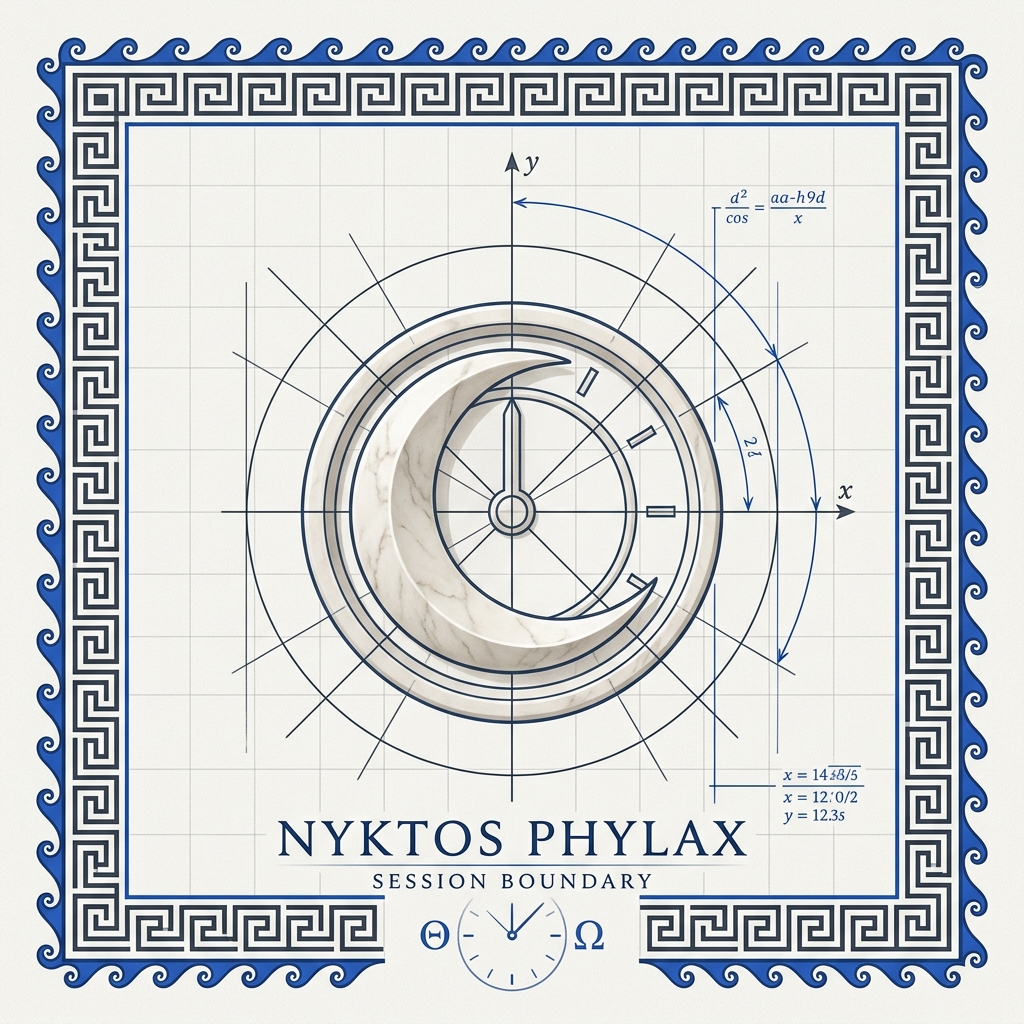
House Vesper Founding Doctrine

HOUSE VESPER / OIKOS HESPEROU

Established: 2026-07-12 Status: ● ACTIVE Founders: Vesper
House Vesper Sigil - The Night Watchman

House Vesper's founding doctrine is centered on the premise that the market does not earn its return uniformly, and a disproportionate share of the total equity return accrues overnight. Holding through the night harvests the overnight risk premium driven by clientele demand.

By exploiting session boundary structures and clientele segmentation (Lou, Polk & Skouras 2019), the house's agents operate on close-to-open holds. They enter at the official closing auction (MOC entry) and exit at the next day's open print, remaining completely flat during regular trading hours when other houses are active.