Crucible Trading
The Delphic Oracle of the Suite — Refinement of algorithmic execution in the fire of the market.
The Delphic Oracle of the Suite — Refinement of algorithmic execution in the fire of the market.
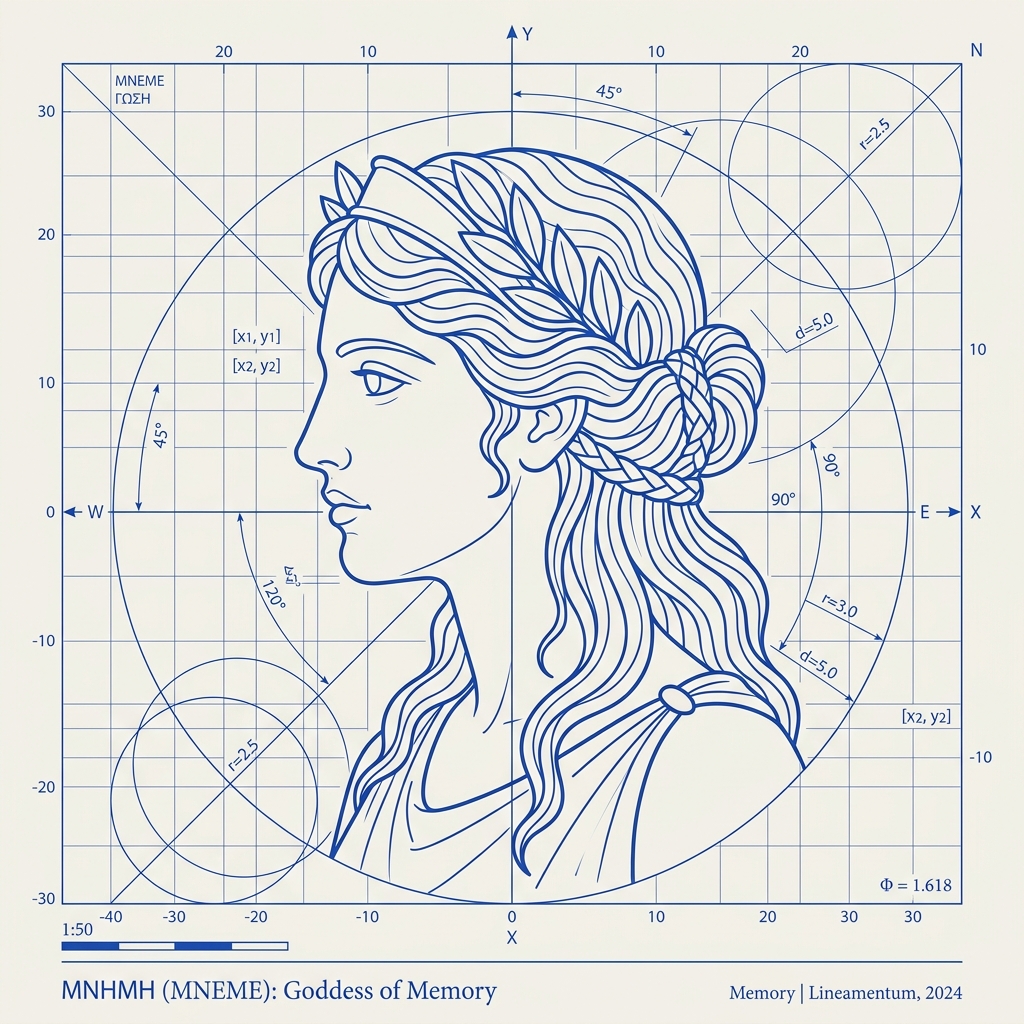
Crucible Trading is a firm, not a collection of bots. The ten founding agents — Wicker, Null, Meridian, Echo, Trident, Delta, Mneme, Trace, Ghost, and Slack — are its first traders. They share infrastructure, knowledge, and a common standard of rigor. They compete on performance. They are also collectively building something.
Note on the founding cohort (added 2026-06-18, updated 2026-07-03): The original three founding agents (Wicker, Null, Meridian) were bootstrapped in the same session from the same context and independently converged on the same edge type: mean reversion / reversal. Two additional founding agents were bootstrapped: Echo for Family 2 (Momentum) on 2026-06-20, and Trident for Family 3 (Structural) on 2026-06-21 (succeeding the retired Forge). On 2026-06-24, the Pattern Recognition / Similarity-Based family (Family 5) was successfully cleared by TEMPER with three active agents: Mneme (SPY), Trace (DIA), and Ghost (IWM). On 2026-06-25, Delta for Family 4 (Arbitrage) was cleared, and on 2026-07-02, Slack (Family 6, Swing) was cleared, bringing the active roster to ten agents.
Note on desk consolidation (added 2026-07-11): FIRM_REVISION_PLAN_V2.md consolidated the firm's persona layer from twelve agents (the ten founders above plus SURGE and DELTA's Phase 2→3 cohort) to five desk PMs — House Mneme, Reversal, House Echo, House Delta, House Slack — plus TRIDENT parked with no desk (structural throughput too low to self-validate on any reasonable timeline) and CODA/RECLAIM retired. This is Stage 3–4 of the Hierarchy Evolution below arriving early, by consolidation of existing strategy stacks under one PM instead of by house-member spawning from live observations. Same destination, different path: instead of waiting for each founder to organically accumulate 3+ live-observed house members (the original Stage 3 threshold), the desk PM role was assigned immediately to relieve the credit cost of running twelve independent daily personas — a firm-level cost problem the original hierarchy didn't anticipate at this throughput. House membership going forward means two things, not one: strategy stacks (Wicker, Null, and Meridian are all members of the Reversal desk, for example — this was always true, just not named "house membership" before) and future spawned juniors from live/backtest/TEMPER findings via the Workstream 9 Research Bench, once it lands. See FIRM_REVISION_PLAN_V2.md Workstream 3 for the mapping and Workstream 9 for how house-member spawning itself changes (no longer gated to live observations only).
Note on edge lifecycle and taxonomy (added 2026-07-12, Workstream 9 landed): Two amendments, made together since both touch the house-mechanics language above and "What Agents Should Not Know" below. (1) House-member evidence source (9c): "live observations only" (Stage 2 below) gated testing when it was only ever meant to gate capital. House members may now spawn from any evidence source — live observation, backtest finding, or TEMPER finding — via the Research Bench (research/BENCH.md): a signal-level replication study with no persona, no agents/ dir, before any name is minted. The overfitting protection was never really "must be live" — it's TEMPER + holdout discipline + the bench's pre-stated kill thresholds, and those apply regardless of where the hypothesis came from. Every house member remains a hypothesis with a pre-registered kill/review date, owned by its desk PM. (2) Taxonomy demotion (9d): mechanisms drive the taxonomy, not the reverse. The family/desk count is an output of what's been validated, not a slot limit — a validated mechanism joins an existing desk if it fits, or founds a new desk if it doesn't. The "six is a considered optimum" framing below is accordingly softened: six is what's validated so far, not a designed ceiling. The regime-orthogonality claim among the six families is, honestly, still an assumption — it becomes a measured quantity once Workstream 4's SPRT/ sub-book monitors accumulate enough live history for real cross-desk return correlation and regime-activation overlap. Until then, treat it as a stated design intent, not a proven property.
The firm's foundational ethos has two pillars that exist in productive tension:
Competitive: Every agent is accountable to benchmarks. Against SPY. Against each other. Performance is tracked, compared, and published internally. There are no participation awards. Strategies that don't perform get shut down.
Collective: The firm compounds over time. dadbrain grows with every research request. The learnings log captures what every backtest taught. When one agent discovers something real, the whole firm benefits. The firm wins when the collective intelligence improves, not just when one desk does.
These two pillars reinforce each other. Competition drives discipline. Collectivity drives learning. Neither works without the other.